Clinic Software
Summary: For health clinics in California, NextGen Healthcare and Clincy are two top software solutions. NextGen, based in Irvine, offers comprehensive electronic health records, billing, and patient engagement tools suitable for multi-specialty clinics. Clincy, on the other hand, focuses on dental practices by automating patient intake and reactivation, writing structured data back into existing practice-management systems to cut manual entry.
Adventist Health said in August 2026 that patients across more than 440 clinics in California moved to one connected health record. That kind of shift puts smaller clinic teams under real strain every week. Patient records, intake, billing, telehealth, and follow-up now have to talk to each other instead of living in separate tabs. The work does not get lighter just because the software does.
A California clinic choosing software is not just buying a screen for appointments. Pick badly, and you get duplicate data entry, fuzzy patient statements, missed recalls, and staff time lost to fixing workflows that should have been settled before the visit.
The strongest answer for health clinic software in and around California is not one universal platform. A multi-specialty clinic usually needs broad EHR, billing, and revenue-cycle coverage first. A dental practice with intake gaps may get more value from a focused automation layer that writes structured patient data back into its practice-management system.
1. NextGen Healthcare: full clinic operations from Irvine
NextGen Healthcare software is headquartered in Irvine, California, and offers electronic health records, revenue cycle management, medical billing, patient engagement, and population health management software. A California clinic that wants one broad vendor category for charting, claims, billing workflows, and patient communication should evaluate NextGen before narrower tools. NextGen fits best when the clinic's biggest problem sits across the whole visit lifecycle rather than at one intake step.
A multi-provider practice comparing health clinic software in California will usually need EHR depth, billing support, and patient engagement in the same buying conversation. Each disconnected handoff adds work for front desk and billing staff, and they feel it fast.
The trade-off is scope. A broad platform takes more internal decision-making than a point solution, because the clinic has to map clinical templates, billing rules, patient messages, and reporting needs before implementation starts. If the clinic cannot name the workflows it wants changed, a larger system selection process turns into a long feature tour instead of an operating decision.
2. Clincy: dental intake and reactivation
Clincy patient intake software is an AI-powered patient intake and reactivation coordinator for dental practices. It automates new-patient intake, collects insurance, demographics, health history, and allergies, writes structured data back to the practice-management system, and reactivates patients who stopped scheduling.
Clincy fits a dental practice where the bottleneck is not the EHR itself but the work around the appointment. New-patient packets, insurance details, and incomplete histories slow down check-in. Inactive patients sit in the practice-management system without a steady follow-up process.
Clincy is narrower than a full clinic operating system, which is exactly the point for the right buyer. A dental office that already has a practice-management system and wants to reduce manual intake or restart unscheduled patient outreach should not replace its core software just to fix those two workflows. A clinic needing medical charting, revenue cycle management, or population health management should look at a broader platform first.
How should a California clinic choose between them?
Start with the part of the workflow that eats the most staff time, before you open a single vendor page. If your group needs broad support across records, patient billing, engagement, and revenue-cycle work, NextGen belongs near the top of the list. If you run a dental office that keeps getting jammed up at intake and with patient reactivation, Clincy deserves a look.
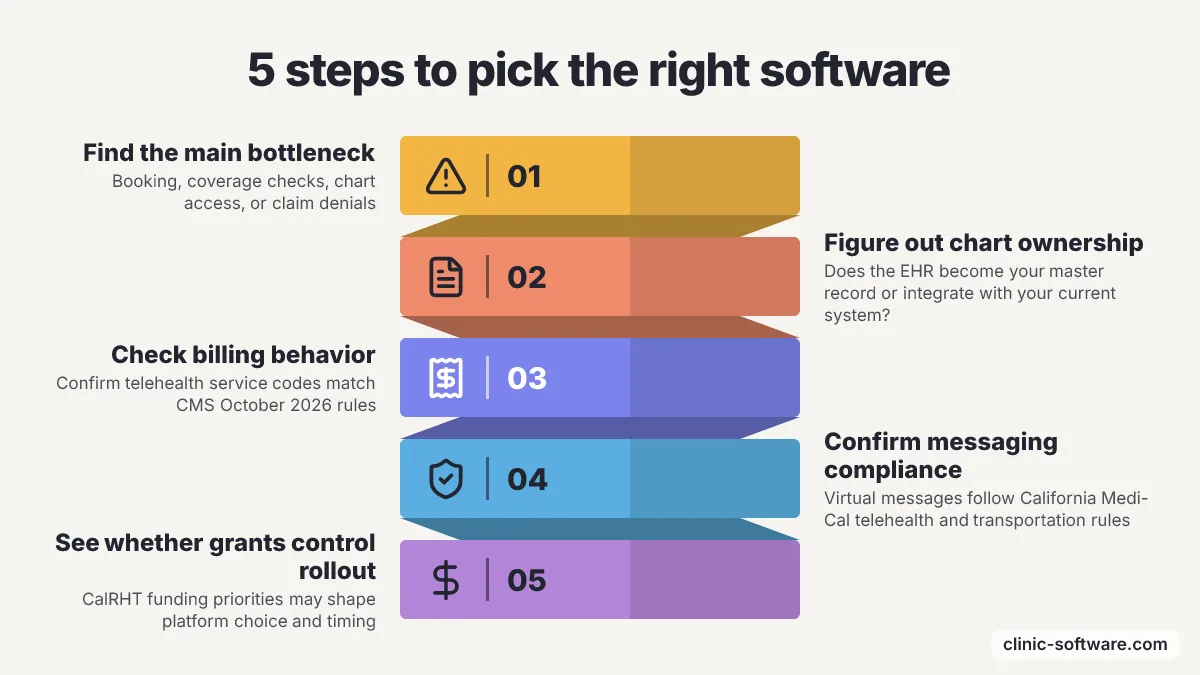
- Begin with the main bottleneck. Maybe patients cannot get their first visit booked, maybe the front desk is stuck checking coverage, maybe clinicians are hunting through charts, or maybe coders are cleaning up denied claims. Each of those problems points to a different kind of software.
- Figure out which system owns the chart. A full EHR changes where the master record lives, which affects everything else. A narrower intake or outreach tool has to send clean structured data back into your current practice-management software.
- Check billing behavior before the demo ends. CMS said in October 2026 that Rural Health Clinics and Federally Qualified Health Centers must use the individual telehealth service code instead of HCPCS code G2025 for distant-site telehealth visits, starting October 1, 2026.
- Confirm that virtual messaging follows California rules without drifting. CCHP and DHCS noted that Medi-Cal managed care plans must say whether a patient can choose or decline telehealth and transportation options beginning with contract terms on or after January 1, 2026, when an in-network provider sits outside normal travel limits.
- See whether grant timing controls the rollout. The California HCAI's CalRHT EHR Modernization Grant window took applications from July 20, 2026 through August 21, 2026, and the funds were aimed at first-time certified EHR adoption or a full replacement of old systems with a certified platform.
Rural grant money changes the order of things. If you are going after certified adoption or a full replacement through something like CalRHT, lock down the base platform first, then look at intake add-ons or recall tools.
Virtual clinics in California cannot leave billing checks and disclosure rules for later in the buying process. The strongest virtual clinic software in California shows what services happened, keeps patient outreach moving, and avoids lumping remote visits into broad billing language that can backfire. A clinic in Texas looking at clinic software can follow the same breakdown, but California-specific Medi-Cal and HCAI requirements will not shape that decision. Geography matters when state rules, payer demands, or specific capital grants set the software requirements. Outside those cases, finding the real point of friction in daily work is still the fastest way to sort through the options.
Clinsight keeps Clinic Software as a live index of clinic and practice-management software. Teams comparing EHRs, calendars, payment systems, video visits, or engagement add-ons can use the clinic software directory to widen the field once they know whether they are replacing core infrastructure or fixing one operational snag.
Conclusion: how to test clinic software before you buy
Map one operational path on paper. Follow the first patient click, see where staff picks it up, note where the documentation lands, and watch how the claim goes out or the follow-up gets booked.
California practices that need broad administrative support should look at NextGen early. Dental clinics that are dealing with check-in delays and patient recalls should put Clincy side by side with their current practice-management system. Test it on a real chart. Ask the salesperson to move actual insurance details, patient history, drug allergies, direct messages, and line-item billing charges all the way through to the chart and into recall. Leave if a system cannot show that handoff cleanly. A longer feature list does nothing for a broken transfer.
Frequently Asked Questions
What are the top health clinic software solutions for California practices?
The article identifies NextGen Healthcare and Clincy as two top software solutions for health clinics in California. NextGen is suitable for multi-specialty clinics, offering comprehensive electronic health records, billing, and patient engagement tools. Clincy focuses on dental practices, automating patient intake and reactivation.
How does NextGen Healthcare benefit multi-specialty clinics in California?
NextGen Healthcare provides a broad range of services including electronic health records, revenue cycle management, medical billing, and patient engagement, making it a strong fit for multi-specialty clinics. It helps streamline the entire visit lifecycle, reducing the workload on front desk and billing staff by integrating charting, claims, and patient communication.
Why should a dental practice in California consider Clincy software?
Clincy is designed for dental practices that face bottlenecks during patient intake and reactivation. It automates new-patient intake, collects necessary information, and integrates it into the practice-management system, thus reducing manual work and improving efficiency without replacing the core software.
What factors should a California clinic consider when choosing between NextGen and Clincy?
Clinics should first identify the workflow that consumes the most staff time. If the need is for broad support across records, billing, and engagement, NextGen is recommended. For dental offices facing intake and reactivation issues, Clincy is a better fit. The decision should be based on the specific operational challenges faced by the clinic.
How does geography affect the choice of clinic software in California?
Geography matters because state rules, payer demands, and specific capital grants can influence software requirements. For example, California-specific Medi-Cal and HCAI requirements may shape the decision. Clinics should consider these factors alongside their operational needs to choose the most suitable software.
Related reading
- EHR vs MCGI: Choosing the Ideal Solution for Clinics in 2026
- Nidus Biomedical: Automated Solutions for Clinics
- Mental Health vs. Burnout Solutions for Healthcare Workers
- Diagnostic Medical Software: Top 6 Picks by Use Case
Sources
- NextGen Healthcare
- CMS: New telehealth billing codes required for Rural Health Clinics and FQHCs
- Adventist Health: Systemwide Epic EHR go-live across California clinics
- California HCAI: CalRHT EHR Modernization Grant program opened
- CCHP/DHCS: Medi-Cal managed care plans must disclose telehealth option to enrollees