 Clinic Software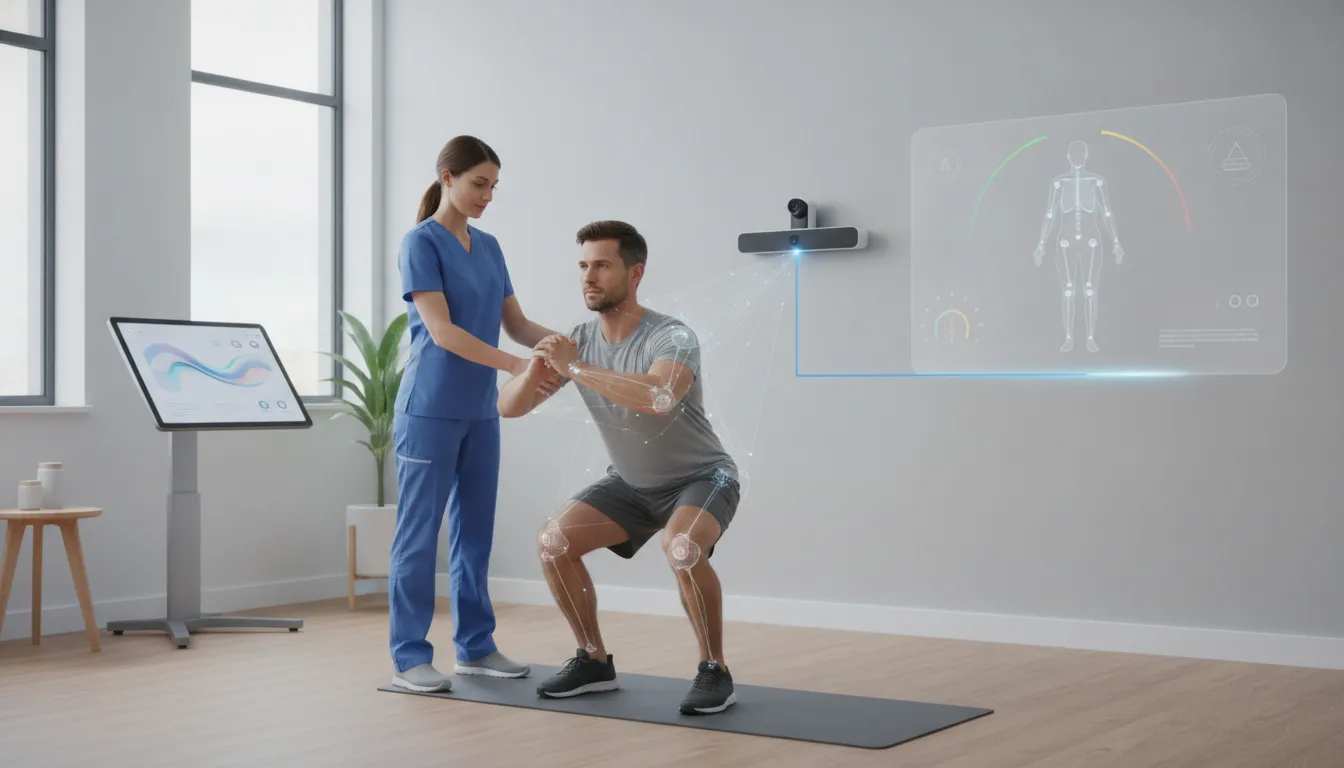
Summary: Arplo offers a transformative approach to physical therapy by utilizing markerless motion capture technology to provide objective, data-driven assessments of patient movement. This innovation allows clinics to monitor patient progress both in-clinic and remotely, supporting Remote Therapeutic Monitoring (RTM) billing and improving patient outcomes. By integrating seamlessly with existing EMR systems, Arplo enhances practice efficiency and financial viability without the need for specialized hardware.
A 4pm cancellation leaves an empty chair and no one to ring. Software that tracks movement can fill that gap with billable work. Clinical software has moved far beyond a basic calendar, and arplo marks a real shift toward rehabilitation built on measurable data. Musculoskeletal problems cost employers an average of $3,105 each year for every affected worker, so clinics keep looking for tools that put numbers on function and make care more consistent. Arplo uses markerless motion capture, turning ordinary video from a phone or tablet into movement measures such as range of motion, symmetry, and gait. No special camera rig is needed. No wearable sensor is needed either. That lets providers watch progress over time, in the clinic and at a distance. For owners stuck with flat reimbursement, those measurements can help support RTM billing and connect patient engagement with steadier finances. But adoption has to be judged with open eyes. The biggest obstacle for most clinics is fitting the software into older EMR systems. A small PT office and a large hospital system face the same basic tradeoff, even if the scale looks different. Tools like arplo bring rich clinical data, yet staff training and current infrastructure still matter. This guide looks at how these platforms work inside healthcare tech and what to weigh before you roll one out.
Key Takeaways
- Objective data cuts variation: Platforms like arplo build standard movement markers from a smartphone camera, so manual observation matters less.
- Integration reduces friction: Built-in EMR support, including links to major systems like Epic, puts movement data straight into the patient record.
- New revenue streams emerge: Digital assessment tools can help providers capture RTM, or Remote Therapeutic Monitoring, codes, which offers a way to recover lost reimbursement.
- Hardware-free scalability: Without costly motion-capture labs or wearable sensors, practices can use these assessments at more than one site with a lower setup burden.
- Clinical research support: The data has two jobs. It helps shape recovery plans for individual patients, and it also gives teams structured metrics for internal quality improvement studies.
At a Glance
| Feature | Arplo Health | Traditional Physical Therapy |
|---|---|---|
| Movement Capture | AI-powered, markerless | Manual, visual observation |
| Primary Device | Smartphone or Tablet | None required |
| Billing Potential | RTM code support | Standard CPT codes |
| Implementation | EMR Integrated | Manual charting |
| Hardware Cost | Minimal, using standard devices | High, if using motion labs |
What are the primary benefits of arplo for physical therapy clinics?
For physical therapy clinics, the main gain from arplo is plain. Measurements stop living inside one therapist’s judgment.
Video comes in. Numbers come out. The software studies motion, then converts mobility, stability, and gait into repeatable data that can be followed across a patient’s recovery. That matters because progress stops feeling fuzzy. It turns into something you can circle in a chart, compare from one week to the next, and discuss without hand-waving.
There’s another benefit, and it’s practical. Clinics often get buried in follow-up paperwork, especially when they need longitudinal notes that actually show change over time. This platform gathers structured metrics during ordinary care, so the same data can be sent to referring physicians or shown to payers when a clinic has to demonstrate results. Staff spend less time building reports. They get more time with patients.
RTM matters here too. The platform supports Remote Therapeutic Monitoring, which lets clinics bill for ongoing oversight of adherence and functional change outside the exam room. That can create recurring revenue. It also keeps patients connected between visits, which usually helps them stick with the plan. You can see whether your current setup meets these standards with our Free Clinic Ad Compliance Checker.
How does markerless motion capture change patient assessment?
Markerless motion capture strips away a lot of setup. A phone or tablet is enough. No dedicated room. No infrared rig. No sticky markers on the body, either, which seems minor until you’ve watched a patient get irritated while someone spends ten minutes lining up hardware.
The arplo method uses the device camera to locate key anatomical points on its own. That means assessment can happen outside the clinic, in a living room, a kitchen, or wherever the patient can stand still long enough for the recording. The line around the clinic gets thinner.
That matters for people who can’t travel easily. It also helps remote patients who live far away. Providers can ask them to do the test at home, then review the video and see range of motion, symmetry, and similar biomarkers right away. The result is a sharper view of recovery. You can watch movement quality change from day one to discharge without shipping hardware around or booking a lab.
Remote assessment also makes frequent check-ins easier. Small problems show up sooner. Treatment can shift sooner too. That usually helps patients, and it keeps the system moving with less waste.
Can arplo integrate with existing EMR and clinical systems?
Yes. The platform is built for enterprise integration, and it works with major electronic health record systems such as Epic. That matters because clinic owners hate the mess that comes from split records. Nobody wants one stack of patient data in the EMR and another stack sitting off to the side.
Arplo is built to avoid that split. Data moves into the patient’s existing chart, where the movement metrics and recovery notes belong. The flow is straight through. No separate island of records. That keeps the clinical picture cleaner.
Once the biomarkers live inside the EMR, they stop acting like extras. They become part of the patient history. Doctors, physical therapists, and specialists can all see the same objective numbers, which makes cross-team work less clumsy and more grounded in the same facts. Care plans tend to line up better when everyone is reading the same chart.
If your clinic is stuck in documentation bottlenecks, you can check that with our Optimizing Healthcare Clinic Workflow for Maximum Efficiency guide. It lays out how to fold tools like this into daily operations. Less paperwork. Less drag.
How do clinics use arplo to support remote care and monitoring?
Clinics use arplo to bridge the gap between in-person appointments by providing continuous, AI-assisted monitoring of patient exercise programs. Through the platform, providers can assign personalized recovery plans that include on-demand support and real-time feedback. Patients use the app to capture their exercises, and the AI-powered computer vision verifies that movements are performed safely and correctly.
This system creates a loop of accountability and insight. If a patient is struggling with a specific range of motion, the provider is alerted via the platform’s data, allowing for timely adjustments to the care plan before a problem becomes severe. This proactive approach helps reduce the risk of secondary injuries and ensures that recovery plans remain effective over time. The ability to make real-time adjustments to treatment plans based on objective data is a significant advantage for both patients and providers.
For practice owners, this also provides a way to maintain patient engagement between visits, which is often a significant Challenges in Private Practice Management that affects long-term patient retention and outcomes. By keeping patients engaged and informed about their progress, clinics can improve patient satisfaction and retention rates.
What is the role of arplo in workforce health and injury prevention?
Arplo serves as an objective tool for employers and occupational medicine clinics to manage workforce health through standardized functional screenings. By generating repeatable movement data, organizations can implement pre-employment screenings, support return-to-work programs after medical leave, and engage in proactive injury prevention initiatives. These initiatives can lead to a healthier workforce and reduced healthcare costs for employers.
Because the software tracks functional change over time, it provides data that is far more reliable than the subjective observations typically used in workplace wellness assessments. The system allows occupational health departments to maintain consistency across multiple locations and different evaluators, ensuring that all employees are measured against the same standards. This consistency is crucial for ensuring fair and accurate assessments.
This data is particularly valuable for risk mitigation; by monitoring movement trends, companies can identify employees at higher risk for musculoskeletal issues and intervene early. Early intervention can prevent more serious injuries and reduce the overall incidence of workplace injuries. You can also analyze your digital reputation during this process with our Free Patient Review Request Kit, which helps maintain the patient trust necessary to implement such proactive health programs.
How does arplo support clinical research and quality improvement?
Arplo supports clinical research and quality improvement by providing structured, objective data that can be used for various studies and internal assessments. The platform's ability to generate standardized movement biomarkers allows researchers to conduct studies with consistent and reliable data, which is essential for producing valid and actionable results. This capability can lead to new insights and advancements in the field of physical therapy and rehabilitation.
Clinics can use the data generated by arplo to conduct internal quality improvement studies, identifying areas for improvement and implementing changes to enhance patient care. This continuous feedback loop can lead to better patient outcomes and higher levels of patient satisfaction. Additionally, the data can be used to demonstrate the efficacy of treatment plans to payers and other stakeholders, supporting reimbursement efforts and justifying the use of advanced technologies in patient care.
The platform's data can also be used to support personalized patient recovery plans, ensuring that each patient receives the most appropriate and effective care based on their unique needs and progress. This personalized approach can lead to better patient outcomes and higher levels of patient satisfaction.
Conclusion
Picking a movement tracking platform means staring hard at what a clinic actually needs and at what the current software can really do. Arplo points to the practical side, video-based assessment, fewer judgment calls, RTM billing support, and a longer record that can show how a patient changes over time. Some clinics care most about their own workflow. Others want remote care to bring in more business. Either way, turning plain video into measurable biomarkers gives Arplo a genuine edge. If you want a broader look at the field, the Clinic Directory is a good place to compare healthcare software and decide what kind of setup can keep a practice moving without constant friction.
Frequently Asked Questions
Is arplo FDA registered?
Yes. Arplo Health says it is an FDA-registered medical technology company. That gives clinic owners a straightforward check on where the company sits in healthcare, and it shows the product is being presented with medical device standards in mind. For a clinic planning to bring software into care or rehab work, that sort of verification can matter a lot. Short answer, it counts.
Does arplo require special sensors or wearables?
No. The platform works without wearables. It runs on the cameras already built into ordinary smartphones and tablets for markerless motion capture. So there’s no motion lab, no infrared rig, and no tracker strapped to a patient. Costs stay lower. Objective movement checks also become easier to use in a therapy office, or in a patient’s home.
How does arplo assist with insurance reimbursements?
Arplo helps clinics support Remote Therapeutic Monitoring billing with structured records. It follows patient performance and functional movement over time, which gives staff the documentation they need for those codes. Work done away from the usual face-to-face visit can still bring in revenue. That can help pay for the burden musculoskeletal conditions place on a patient panel. It’s a practical piece of the billing puzzle.
Is patient data secure on the arplo platform?
Yes. The Arplo system is built to meet HIPAA requirements. That matters when patient health information gets captured, processed, and stored as movement data. Secure encryption is part of the picture, and privacy-minded design is too. Clinics can use digital assessment tools and still meet their legal and ethical duties to protect sensitive patient information in clinical settings and research settings. Security here is handled as part of the job, not an afterthought.
Related reading
- Leadership Styles Shaping Hospital Culture: A 2026 Guide
- 6 HIPAA-Compliant Messaging Platforms That Do Marketing Automation in 2026

