Clinic Software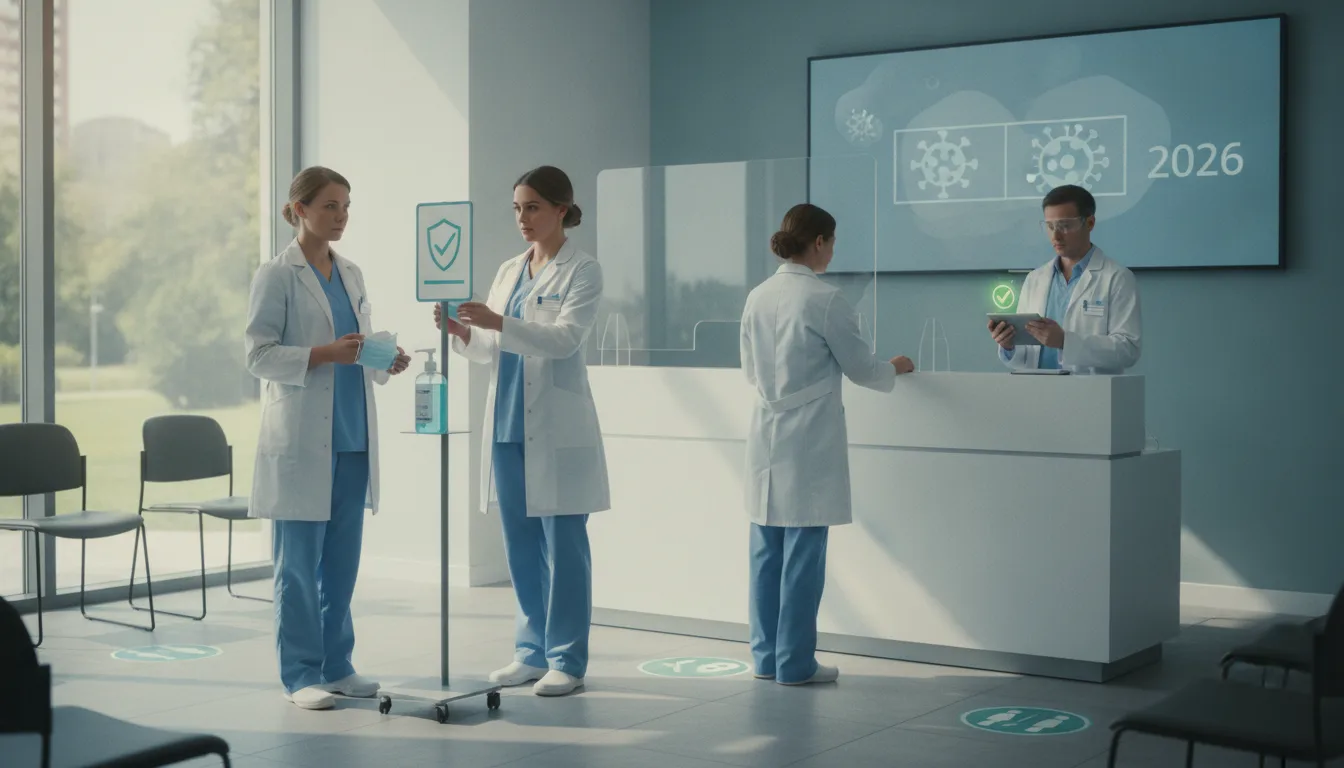
Summary: To prepare hospitals for a measles outbreak, implement specialized protocols focusing on airborne isolation and staff immunity verification. Use pre-arrival screening to identify potential cases and direct them to dedicated entrances to prevent contamination. Ensure all healthcare personnel use N95 respirators and have confirmed immunity. Collaborate with public health authorities for immediate reporting and coordination of post-exposure prophylaxis.
The usual guidance leans on universal precautions and routine triage. For measles, that falls short. The virus travels through the air and can linger in a room for up to 2 hours after the patient leaves, so a normal waiting area can expose everyone inside. Preparing for a measles outbreak means a different setup, because this infection spreads far more easily than ordinary respiratory illnesses. Clinics and hospitals need to move away from passive reception and toward screening before the patient ever enters. Clinic owners should put airborne isolation and staff immunity checks first, because standard masks and basic distancing do little against measles. When you are preparing hospital for measles outbreak scenarios, the plan has to stop the virus at the door. Protecting staff and other patients means immediate placement in an airborne infection isolation room (AIIR) and strict use of N95 respirators for all healthcare personnel, no matter what they report about vaccination.
Key Takeaways -
- Airborne spread demands special isolation: The measles virus can stay in the air for up to 2 hours after an infected person leaves, so open waiting rooms are a bad place for it (CDC, 2023).
- Staff immunity comes first: All healthcare personnel must have confirmed presumptive evidence of immunity, and even vaccinated staff still need respiratory protection during contact (CDC, 2023).
- Fast identification cuts the chance of facility closure: Screening patients for symptoms and exposure history before they walk in keeps the environment from getting contaminated.
- Working with public health is required: Clinics need direct reporting lines to health departments so measles cases and post-exposure prophylaxis can be handled quickly.
- N95 protection is non-negotiable: Surgical masks do not do the job for measles, so staff must use fit-tested N95 respirators or stronger respiratory protection whenever they enter an isolation area (CDC, 2023).
At a Glance
| Strategy Component | Standard Protocol | Measles-Specific Requirement |
|---|---|---|
| Primary PPE | Surgical Mask | N95 Respirator or higher |
| Room Placement | Any Exam Room | Airborne Infection Isolation Room (AIIR) |
| Patient Arrival | Lobby Check-in | Pre-arrival screening/Triage outside |
| Staff Requirement | Hand Hygiene | Verified immunity + Respiratory protection |
| Air Safety | Standard Ventilation | Negative pressure ventilation |
Why is standard triage insufficient for measles?
Standard triage misses the mark because it assumes infection moves through big droplets or surface contact alone. Measles rides the air. A patient who coughs or sneezes in your lobby can leave the shared air contaminated for 2 hours. Clear the lobby if you want, the next person who walks in can still be exposed. Facilities that handle measles like an ordinary respiratory risk often end up with large outbreaks among staff and patients. Start by admitting what the lobby is, a place where infection can spread fast. Anyone with febrile rash illness needs a “no-lobby” policy. If measles is suspected, tell the patient to call ahead. Use Clinic Directory to check whether your current software can handle digital intake forms that screen for these symptoms before arrival. If screening shows possible risk, send the patient to a separate entrance or have them wait in their vehicle. That keeps the virus out of the central ventilation system, which is the usual source of multi-room exposures in healthcare settings.
What is the role of digital booking tools in outbreak management?
Digital booking tools can ask logic-based questions before a visit is confirmed. That catches possible measles cases early, before anyone settles into the lobby. Put money into this kind of platform and you lower the odds of a whole-facility exposure, the sort that can shut a clinic for a while or leave staff sick.
When you update your clinic booking tool development ROI, look for a feature that flags symptoms like rash and fever. The warning shows up before the patient walks in, which is the point. Staff can see it and act without guessing.
You can also check how ready your systems are with our Free Clinic Ad Compliance Checker. It keeps patient-facing messages clear and compliant during stressful periods. A well set up booking system does more than sort appointments. It gives you an early warning. Ask about recent international travel. Ask about contact with known cases. High-risk people stay out of the waiting area before they ever arrive.
How does managing no-shows impact infectious disease preparedness?
Good no-show management lowers the number of people in the building at any given time, and that matters during a community outbreak. High no-show rates can also point to a schedule that is not working well, which tends to leave the waiting room crowded when patients do come in. Understanding the no-show management tool market need lets owners keep clinics running at a lower, more controlled capacity.
When the clinic is not overbooked, physical distancing is easier to maintain. Exam rooms can stay open for immediate isolation if they are needed. Fewer people inside means fewer people exposed if a measles case arrives. Use our Free Patient Review Request Kit to keep patients engaged without asking them to come into the office. That helps business operations keep moving while cutting down foot traffic during serious public health events.
When must you prioritize airborne infection isolation?
Airborne infection isolation rooms, or AIIRs, should be used for any patient with suspected measles. If an AIIR is not available, move the patient to a private room with a door that closes securely. A room that does not share ventilation with the rest of the facility is better still.
Measles spreads with extraordinary ease, so basic airflow is not enough. The point is to hold the virus at the source. If you cannot provide an AIIR, place the patient in a secure private space and limit how many staff members enter. Anyone who does enter should wear an N95 respirator, no matter their vaccination history.
That guidance does not fit clinics that are not set up for airborne pathogens. If your facility does not have private rooms with secure doors and the right ventilation controls, the safer move is to send the suspected measles patient straight to an emergency department or another site that can handle airborne precautions. Trying to manage the patient in an open space, or in a room with poor ventilation, puts your patient population and your workforce at direct risk.
How do you verify and maintain staff immunity?
Keeping an up to date registry of staff measles immunity is part of clinical leadership. You should confirm that every employee has documented proof of immunity, such as a positive IgG titer or two doses of the MMR vaccine. Do not assume long-tenured staff are immune. That assumption can fail badly in an outbreak.
If an outbreak does happen, the facility has to manage any staff member who cannot show proof of immunity. Some of those employees may need to stay home during the height of the outbreak so they do not become infected and pass the virus on. Store these records in a secure digital format that your management or HR team can reach quickly. If you are choosing software for this job, make sure it meets regulatory rules for data privacy and clinical documentation.
How should you collaborate with public health authorities?
Collaboration with public health authorities is not optional. You are legally required to report suspected measles cases to your local health department. This reporting must be immediate, as the health department coordinates critical post-exposure prophylaxis (PEP) for people who may have been exposed in your facility. Establish a clear, internal protocol that defines exactly who is responsible for this communication. Designate specific individuals to act as the primary contacts with health officials so that information remains consistent and flows rapidly. These contacts should be available to assist with contact tracing, which is essential for identifying other patients or staff who were in your facility at the same time as the infectious patient. Effective communication ensures that you receive the most accurate guidance on testing and quarantine protocols specific to your local area. Do not wait until a confirmed case appears; establish these relationships and communication channels during periods of lower disease activity so that they are functional when you need them most.
Conclusion
Initiate your measles preparedness by updating your staff immunity registry today. Ensuring your team is protected is the primary step for facility safety, as it minimizes the risk of internal transmission during an outbreak. It takes approximately one week to audit records and follow up on missing documentation. This guidance is most applicable to outpatient clinics and primary care practices. It does not apply to specialized facilities, such as infectious disease hospitals, which already operate under full, permanent airborne-pathogen protocols. When your records are verified, prioritize the creation of a "pre-arrival" patient screening protocol to ensure no patient with a rash enters your lobby.
Frequently Asked Questions
Can vaccinated staff still contract measles in a clinical setting?
Yes, it is rare but possible. Even if a healthcare worker has proof of immunity, the CDC recommends they continue to follow all standard and airborne precautions when entering a room with a known or suspected measles patient. This is because the high level of exposure in a healthcare setting can occasionally overwhelm standard immunity thresholds, requiring consistent use of respiratory protection.
What should we do if we do not have an isolation room?
If your facility does not have an AIIR or a private room that can be closed off, you must safely move the patient to a designated facility equipped for airborne precautions. Do not allow the patient to remain in an open waiting area, as this puts all other patients and staff at immediate risk. Contact your local health department immediately for guidance on proper, safe patient transport.
How do we identify a suspected measles patient quickly?
Implement a screening process that occurs before the patient arrives. Use your digital booking system or a phone-screening script to ask about fever, rash, and recent travel or exposure. At the front entrance, use clear signage that directs patients with these symptoms to call the clinic from their car rather than entering the building, allowing for further assessment outside.
How long does measles remain in the air in a medical office?
The measles virus is highly infectious and can remain suspended in the air for up to 2 hours after an infected patient has left a room. Because of this, standard room turnover protocols are often insufficient. You should designate specific rooms for isolation and follow facility-specific protocols for environmental decontamination before allowing other patients to use the space after a suspected case."},metaDescription:{citations:,confidence:
Related reading
- Leveraging Technology for Clinic Efficiency: A Guide for Oncology Owners
- Stipple Bio: 2026 Comparison Guide for Clinic Software
- 7 Most User-Friendly Patient Acquisition Platforms for Non-Tech-Savvy Practice Owners in 2026
- 7 Best Affordable Marketing Platforms for Small Medical Practices in 2026